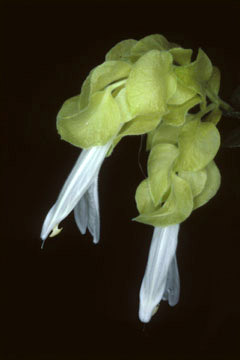
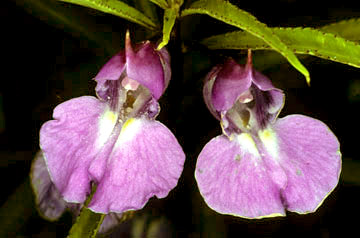
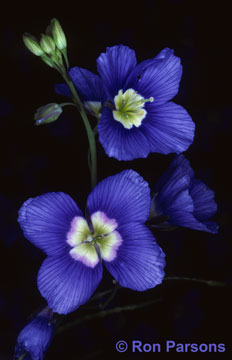
Martynia sp. |
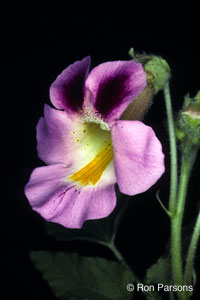
Photogallery Ron has a very large collection of slides of rare and unusual plants from many of the flowering plant families (and even some of the non-flowering ones). The photographs are taken of plants in private collections, public gardens and arboretums, and where and whenever possible, in situ. The photogallery features a small sampling of his photographs, and will continue to be updated as we add more, so check back frequently. When photographs are taken in situ, the county and state (US) or country is given below the photograph. When the country is shown in ( ), e.g. (Japan), that denotes the origin of the plant. If you believe you know the identity of a plant denoted as sp. or ?, Ron welcomes the information and if you would like to provide it, please see the contact page. Higher resolution photos are available on request; please see the contact page. As of October, 2009, with the increasing difficulty in obtaining and developing traditional Kodachrome slides, Ron "went digital". He now has an extensive collection of photographs of orchids and other flowers. This page now includes both scanned images of traditional slides as well as Ron's digital images.
Sign our Guestbook |

|
|||||||||||||||||||||||||||||||||||||||||||||||||||||||||||||||||||||||||||||||||||||||||